

Key takeaways
- Ghostwriting turns your ideas, experiences and opinions into posts published under your name.
- It's ethical when the thinking is yours, the facts are true and you approve every post before it goes live.
- It crosses the line when a writer invents stories, numbers or opinions, or posts without your sign-off.
- No single disclosure rule applies. Be honest if asked, and check your company's and industry's rules.
LinkedIn ghostwriting is when a writer helps you turn your own ideas, experiences, and opinions into posts or articles published under your name. It’s ethical when the thinking is yours, the facts are true, and you approve the final post before it goes live. It stops being ethical when someone invents stories, credentials, or opinions you don’t hold, or publishes without your sign-off. Good ghostwriting doesn’t create a new persona. It makes the one you already have easier to hear, more often, without taking over your week.
What does LinkedIn ghostwriting actually involve?
The work itself is straightforward.
A writer spends time learning how you think and how you talk. That usually means a conversation or two, a look at things you’ve already written or said (emails, talks, interviews, old posts), and some honest discussion about the topics you want to be known for. From there, the writer turns your raw material into drafts. You edit them, approve them, or throw them out. Then they’re published under your name.
The raw material can be almost anything: a voice note you recorded in the car after a client meeting, a rant about an industry trend, a lesson from a hire that went wrong, a slide from last quarter’s board deck. The writer’s job is to find the post inside it.
It helps to be clear about what ghostwriting is not:
- It’s not a persona. A writer inventing a “thought leader” version of you, with views you don’t hold and stories that didn’t happen, isn’t ghostwriting. It’s fiction with your photo on it.
- It’s not auto-posting. A tool that publishes generic tips on a schedule isn’t writing for you. It’s writing for anyone, and people can tell.
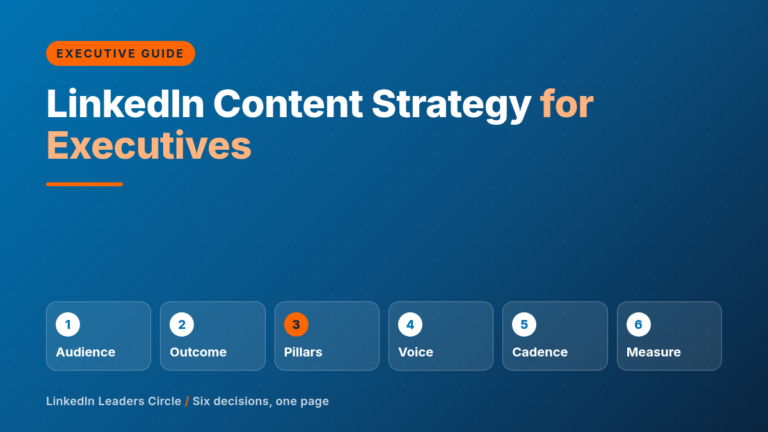
Many leaders who use a ghostwriter also get help with their profile or a content plan (see our guide to LinkedIn content strategy for executives). Those are useful, but they’re separate jobs. Ghostwriting is specifically about the words that go out under your name.
Why do so many leaders use a ghostwriter?
Time, mostly. The leaders who have the most to say are usually the ones with the least room in their calendar to say it.
And the pressure to show up is real. In LinkedIn’s November 2026 survey, 80% of founders said they’d had to become content creators to build credibility, up from 61% just six months earlier (LinkedIn, 2026). On the buyer side, 73% of B2B buyers say a company’s thought leadership is a more trustworthy basis for judging it than its marketing materials (Edelman and LinkedIn, 2024).
So leaders face a choice: find the hours, go quiet, or get help. Ghostwriting is the third option.
When is LinkedIn ghostwriting ethical?
Here’s a standard you can use with any writer, including us:
- The ideas, experiences, and opinions come from you. The writer shapes them. They don’t supply them.
- Facts, numbers, and claims are checked with you. If a post says revenue grew, it grew, by the amount stated.
- You can edit or reject any draft. No exceptions, no awkwardness.
- Nothing is published without your approval. Silence isn’t approval. “I didn’t get to it” means the post waits.
If all four are true, you’re on solid ground.
This isn’t a new idea. Leaders have used speechwriters, communications teams, and editors for a long time. A CEO’s shareholder letter or keynote is rarely a solo effort, and nobody considers it dishonest, because the substance belongs to the person delivering it. LinkedIn is a newer medium, but the same principle applies.
Note: as far as we’re aware, LinkedIn hasn’t published a specific rule for or against ghostwritten posts. The standard above is professional judgment, not a platform requirement.
When does LinkedIn ghostwriting cross a line?
Here’s where it goes wrong:
- Invented stories. A career moment that didn’t happen. A customer conversation that never took place.
- Invented numbers. Results, growth figures, or audience sizes the person can’t stand behind.
- Borrowed opinions. Strong positions on topics the person has never actually thought about, picked because they’ll get engagement.
- Publishing without knowledge. Posts going out that the person hasn’t seen.
- Writing that nobody would recognize. Content so generic, or so far from how the person speaks, that colleagues and clients wouldn’t connect it to them.
- Casual password requests. Asking for your login as a routine first step is a security risk and a sign of a sloppy process. More on that in our guide to hiring a LinkedIn management service.
None of these are about ghostwriting itself. They’re about a bad process.
Do you have to disclose a ghostwriter?
This is general information, not legal advice.
There’s no single, universal rule. Whether you disclose usually comes down to three things:
- Your company’s policy. Some organizations have communications guidelines that cover who can post on an executive’s behalf.
- Your industry. Regulated fields, such as financial services, healthcare, and law, can have specific rules about public communications. If you work in one, check with your compliance team or counsel.
- Your own comfort. Some leaders mention that they work with a writer; most don’t put a label on each post.
A practical approach most people can live with: be honest if anyone asks, make sure you’re the source of the thinking, and never let anything go out that you wouldn’t happily defend in a meeting. If the ideas are yours and you approved the words, you’re doing what leaders have always done with speechwriters.
How does a sound ghostwriting process protect your voice?
Whoever you work with, expect something like this:
- A voice-capture conversation. The writer should ask how you talk, not just what you do. Good ones also review things you’ve already written or said.
- A short list of topics you actually want to own. Three to five areas where you have genuine experience and opinions.
- Drafts built from your examples. If a draft could be about anyone in your industry, it isn’t ready.
- A simple approval step. One place to review, edit, and approve, without a long chain of emails.
- A way to add or kill. You should be able to drop in a last-minute thought, or pull a post that no longer feels right.
This is how we run done-for-you LinkedIn management at LinkedIn Leaders Circle: your ideas, our writing, your approval.
What won’t ghostwriting do on its own?
Ghostwriting won’t fix an unclear offer. If you can’t explain who you help and how, better writing just makes the confusion more polished.
It won’t rescue a weak profile. When a post does well, people click through to your profile. If that profile is out of date or vague, the trail goes cold. That’s why many leaders start with a LinkedIn profile rewrite before regular posting.
And it won’t guarantee conversations or sales. Consistent, credible content makes it easier for the right people to notice and trust you. Turning that attention into business usually takes deliberate follow-up, too.
Frequently asked questions
What is LinkedIn ghostwriting?
LinkedIn ghostwriting is when a writer helps a professional turn their own ideas, stories, and opinions into posts or articles published under their name. The value is time saved and clearer, more consistent writing. It isn’t inventing a persona; you should recognize every line as something you believe.
Is LinkedIn ghostwriting ethical?
It’s ethical when the ideas and experiences are yours, the facts are true, and you approve every post before it’s published. It isn’t ethical when a writer invents stories, numbers, or opinions, or posts without your knowledge. It follows the same standard leaders have long applied to speechwriters.
Do I have to disclose a LinkedIn ghostwriter?
There’s no single universal rule. Disclosure usually depends on your company’s policy, any rules in your industry, and your own preference. A sensible standard is to be honest if asked and stay the source of the thinking. If you work in a regulated field, check with compliance or counsel. This isn’t legal advice.
Will ghostwritten posts sound like me?
They should, if the writer starts with a real conversation, studies how you already speak, and only uses your experiences. You should edit anything that feels off. If a draft could have been written about anyone in your industry, it isn’t ready to publish.
Want help that follows this standard?
If you’d like a writer who works from your ideas, in your voice, with your approval on every post, that’s exactly how we work. Read more about our done-for-you LinkedIn management or all of our LinkedIn services, learn about us, see what to look for in any LinkedIn service, or book a free 30-minute discovery call, by phone or video, and we’ll talk it through.

We write and manage LinkedIn profiles, posts and outreach for founders, executives and businesses who want to grow on LinkedIn but don't have the time to do it themselves. About us